You bought an electric vehicle, or you’re about to. The dealership told you that you can just plug into a regular outlet. That’s technically true. It’s also a terrible long-term plan for most households, and it catches a lot of new EV owners off guard once they’re living with it.
Here’s a clear breakdown of what your charging options actually look like, what a proper home installation involves in BC, and what makes sense for different situations in the Okanagan.
Level 1 Charging: The Wall Outlet Option
Level 1 charging uses a standard 120V outlet, the same type that powers your lamps and phone chargers. Every EV comes with a Level 1 cord. You plug in, and the car charges.
The problem is the speed. Level 1 typically delivers 6 to 8 kilometres of range per hour of charging. If you drive 60 kilometres a day, you need 8 to 10 hours plugged in overnight to recover that range.
For some drivers, this works fine. If you have a short commute, a mild climate, and you charge every single night without exception, Level 1 is manageable. But in the Okanagan, where cold winters reduce battery range and many people drive longer distances between communities, Level 1 is often the first frustration new EV owners encounter.
Level 2 Charging: What Most Homeowners Actually Install
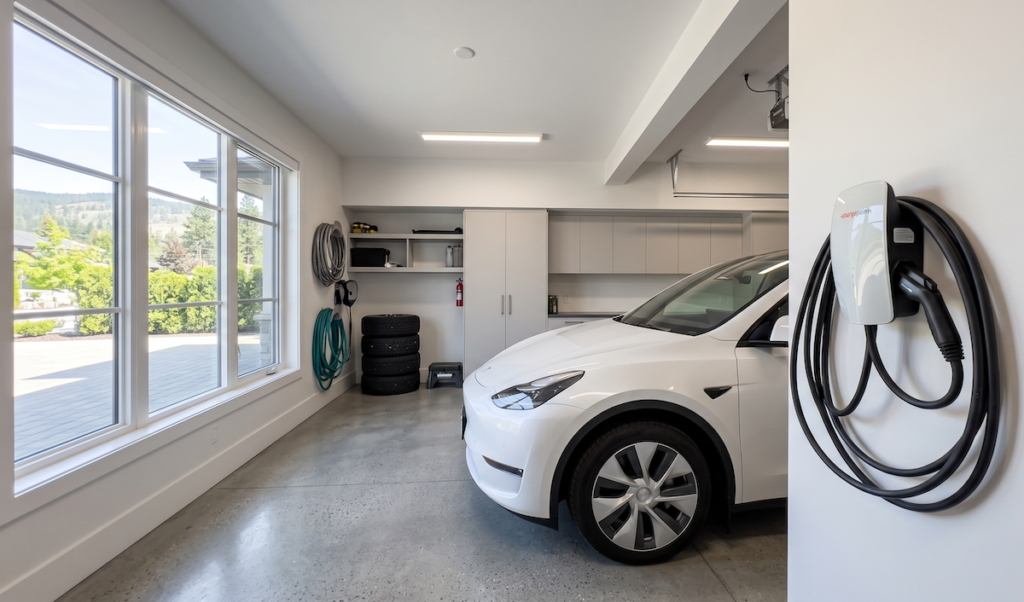
Level 2 charging uses a 240V circuit, the same voltage as your dryer or electric range. A Level 2 charger delivers roughly 30 to 50 kilometres of range per hour, depending on the vehicle and the charger’s amperage.
In practical terms: you park, you plug in, and by morning your car is full. You stop thinking about charging.
For the vast majority of EV-owning homeowners, a Level 2 installation is the right setup. It is not a luxury. It is the difference between EV ownership being seamless and EV ownership being a daily calculation.
What a Proper Level 2 Installation Involves in BC
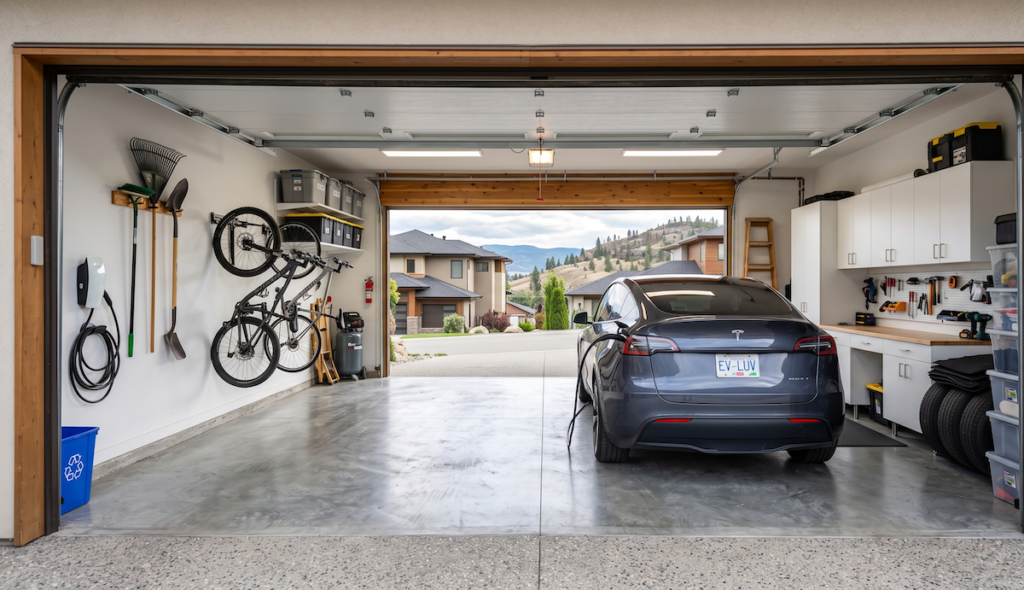
A Level 2 charger requires a dedicated 240V circuit run from your electrical panel to where the car will be charged. In most cases that’s a garage or carport. The specifics:
- Circuit sizing: Most Level 2 chargers run on a 40-amp or 50-amp circuit (a 32-amp or 40-amp charger respectively). Kyle will confirm what your vehicle and charger require.
- Panel capacity: Your existing panel needs to have available capacity for the new circuit. Older 100-amp panels are sometimes at or near capacity in a home that already has an electric range, dryer, and hot water tank. This gets checked before any work starts.
- Charger selection: Kyle can advise on charger brands and models, but will not push you toward a specific product. Bring your charger or tell him what you have in mind, and he’ll make sure the circuit matches.
- Permit required: In BC, a permit is required for EV charger installations. This is not something to skip. The permit protects you, and the inspection confirms the installation is done correctly and to current code.
Smart Chargers and Load Management
A newer consideration for EV installations, particularly in homes where panel capacity is a concern, is smart charging. A smart charger communicates with your panel or a load management device to ensure the EV only draws power when other large loads in the home are not competing for capacity.
This can allow a home with a full panel to add an EV charger without a full panel upgrade, depending on the specific load profile. It doesn’t work for every situation, but it’s worth discussing before assuming an upgrade is required.
What About Condos and Multi-Unit Buildings?
This is a growing question in Kelowna as strata buildings navigate EV charging access. The rules around strata EV installations in BC have evolved, and Kyle can walk through what’s involved if you’re in a townhouse or condo situation. It typically requires coordination with strata and involves a different permitting approach than a standalone home.
Ready to stop using a regular outlet for your EV?
Kemp Co Electric serves Kelowna, West Kelowna, Peachland, Lake Country, and the surrounding Okanagan Valley. When you reach out, you’re talking directly to Kyle, the person who will actually do the work.
Get in touch for a site visit and a no-surprise quote. Permits and inspections are included.
KempCoElectric.ca | Kelowna, BC | Licensed, Insured, Red Seal
