
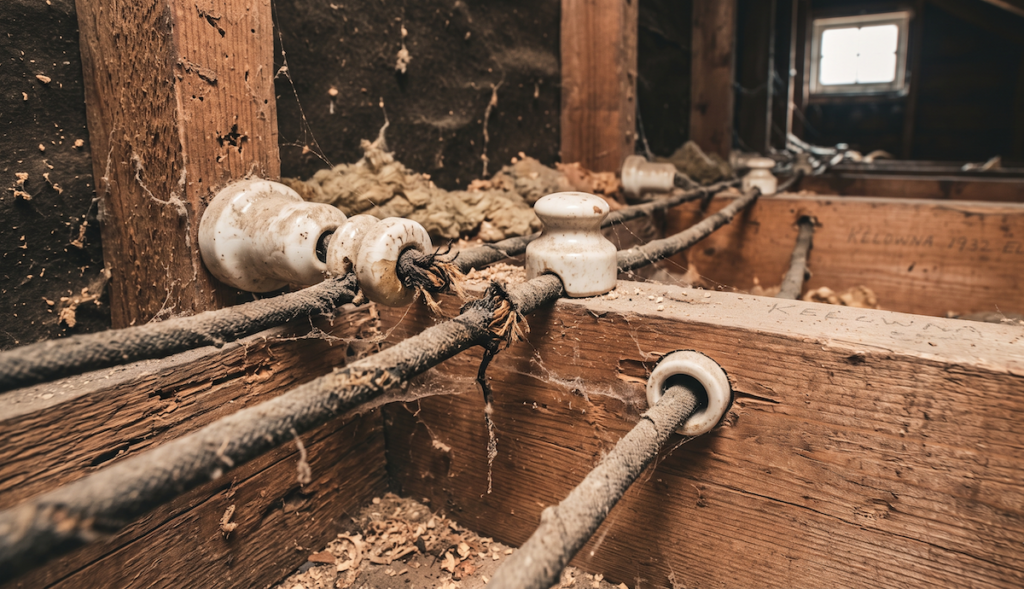
Kelowna has a lot of older housing stock. Homes built before the 1970s may still have original knob-and-tube wiring. Homes built or renovated in the late 1960s and 1970s may have aluminum branch circuit wiring. Both situations come with specific concerns, and both are frequently misunderstood.
This is a plain-language breakdown of what each type of old wiring actually means, when it’s a problem, and what your options are.
Knob-and-Tube Wiring: The Facts
Knob-and-tube (K&T) is an early style of electrical wiring used in Canadian homes from roughly the 1880s through the 1940s. It consists of individual insulated conductors run through walls and ceilings, supported by ceramic knobs and passing through joists via ceramic tubes. There is no ground wire.
Why it raises concerns
K&T was designed for a fraction of the electrical load a modern home uses. The insulation on original K&T wiring is typically rubber or cloth, which becomes brittle and cracks with age. The system has no ground, which means no path for fault current and no protection from modern GFCI or AFCI devices. And because the wires need airspace to dissipate heat, they should not be covered with insulation, which conflicts with modern energy efficiency standards.
What actually makes it dangerous
K&T that has been left alone, in good physical condition, and not overloaded can still be functional. The problems arise when:
- The insulation has deteriorated over decades.
- Previous owners spliced in modern wiring incorrectly.
- The system has been overloaded with modern appliance and lighting demands.
- Insulation has been blown or placed over wiring in the attic, trapping heat.
The insurance situation with K&T is similar to what happens with problem panels. Many BC insurers will not provide coverage for homes with active knob-and-tube wiring, or will require a licensed electrical inspection and a letter confirming conditions before binding a policy.
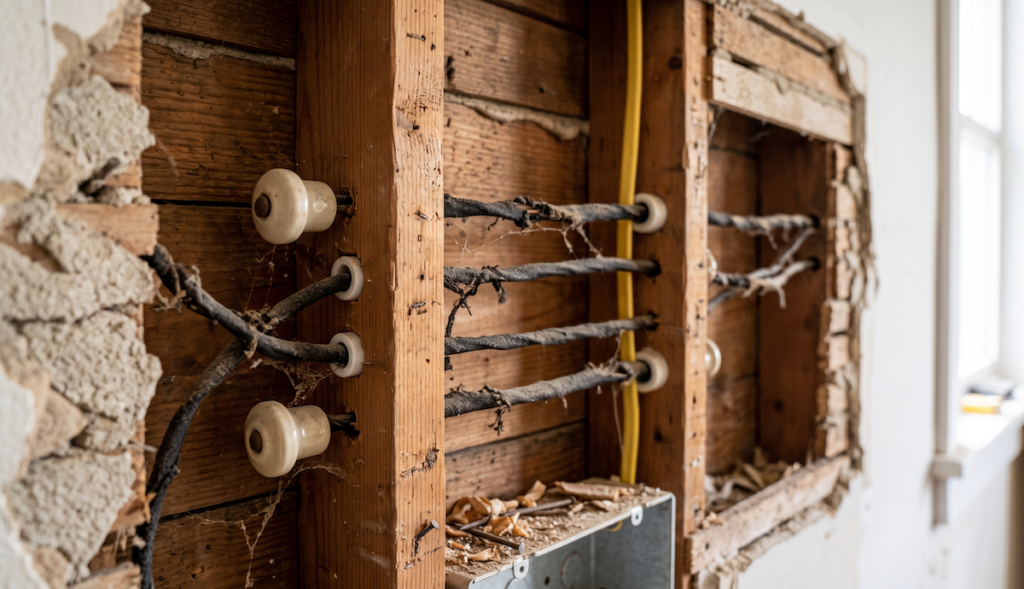
Aluminum Branch Circuit Wiring: Different Problem, Different Fix
Aluminum wiring in Canadian homes typically refers to aluminum branch circuit wiring installed between the late 1960s and mid-1970s. This is different from the aluminum used in service entrance cables (the large wires from the meter to your panel), which is still standard and not a concern.
Branch circuit aluminum wiring was used as a cost-saving alternative to copper during a period of high copper prices. The issue is that aluminum expands and contracts more than copper with temperature changes, which causes connections to loosen over time. Loose connections create resistance, and resistance creates heat. That heat, at a device or outlet, is a fire risk.
How to know if your home has it
The most reliable way is to check your electrical panel. If you see wiring labeled AL or with silver-coloured conductors on the branch circuit breakers (not just the service entrance), you likely have aluminum branch circuit wiring. A licensed electrician can confirm this.
What can be done
There are a few accepted remediation approaches:
- CO/ALR devices: Replacing all switches, outlets, and devices with ones specifically rated for aluminum wiring (labeled CO/ALR) reduces the connection risk. This is a lower-cost option but requires every device in the home to be addressed.
- Pigtailing: A licensed electrician adds a short copper wire (pigtail) at each connection point using an approved connector. The aluminum wiring stays in the walls; the connections become copper. This is a common and accepted approach.
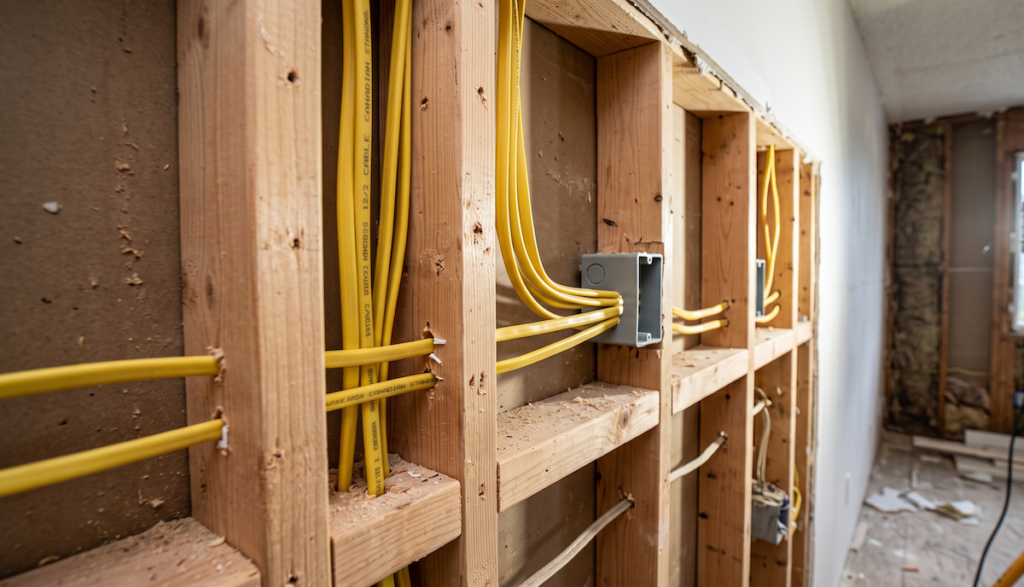
- Full rewire: In cases where the wiring is in poor condition or the homeowner is doing a major renovation anyway, replacing the branch circuit wiring with copper is the most complete solution.
The right approach depends on the condition of your wiring, the scope of what you’re trying to accomplish, and your budget. Kyle can walk you through it at a site visit without pushing you toward the most expensive option.
What About Selling or Insuring a Home With Old Wiring?
This is where old wiring becomes most immediately relevant for many Okanagan homeowners. A home inspection will flag K&T or aluminum wiring every time. Your insurance company may ask about it at renewal. And a buyer’s insurer may require remediation before they’ll bind a policy on a purchase.
Getting an electrical assessment and a clear written summary of what you have, and what’s been done, gives you something concrete to provide to insurers and buyers instead of uncertainty.
Not sure what wiring is behind your walls? Start with a clear answer.
Kemp Co Electric serves Kelowna, West Kelowna, Peachland, Lake Country, and the surrounding Okanagan Valley. When you reach out, you’re talking directly to Kyle, the person who will actually do the work.
Get in touch for a site visit and a no-surprise quote. Permits and inspections are included.
KempCoElectric.ca | Kelowna, BC | Licensed, Insured, Red Seal
